
Sitebulb Labs
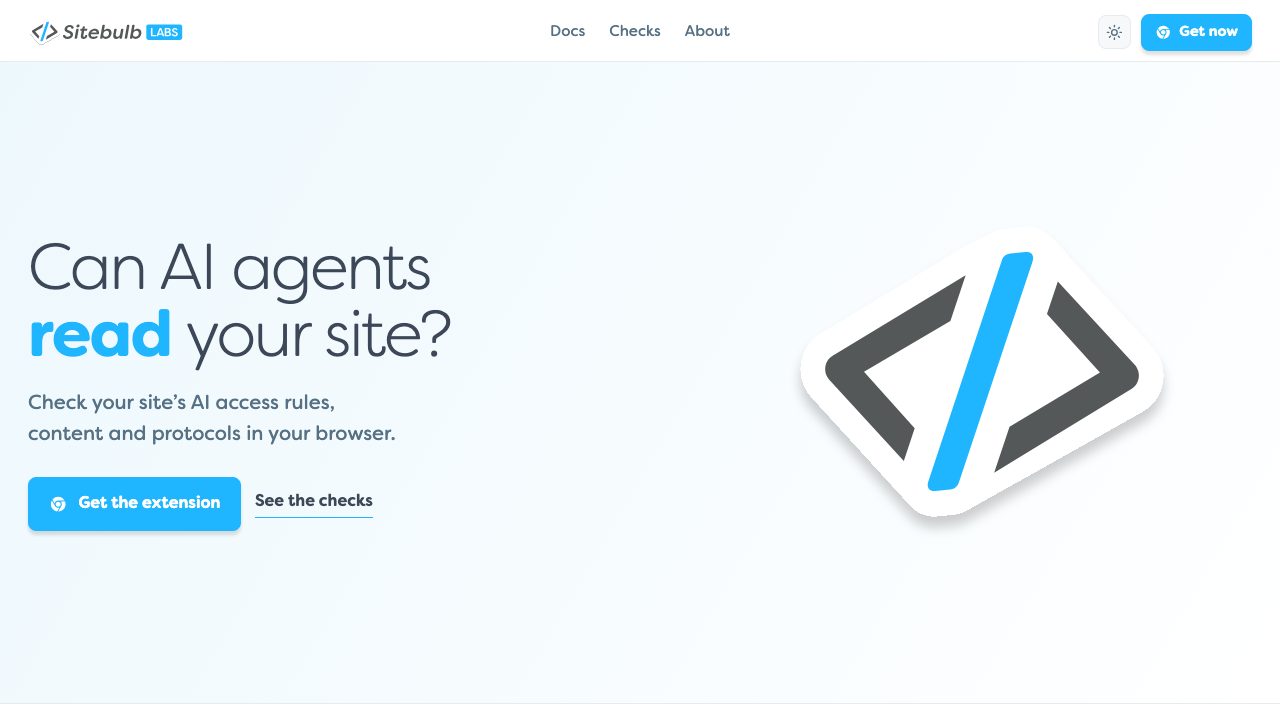
Can AI agents read your site?
A Chrome extension that scores any page for AI agents and tells you what to fix first.
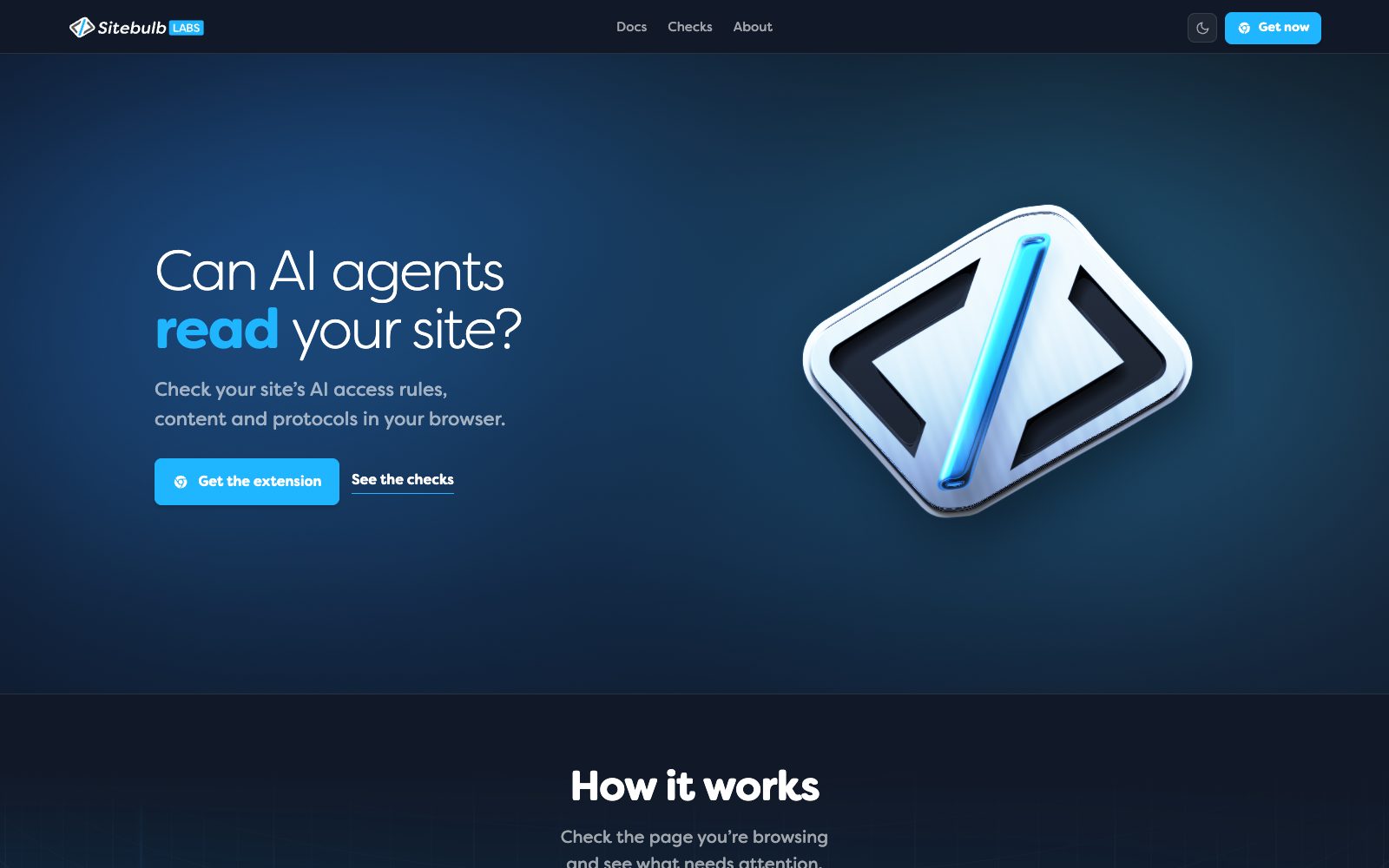
The home page asks the question directly: can AI agents read your site?
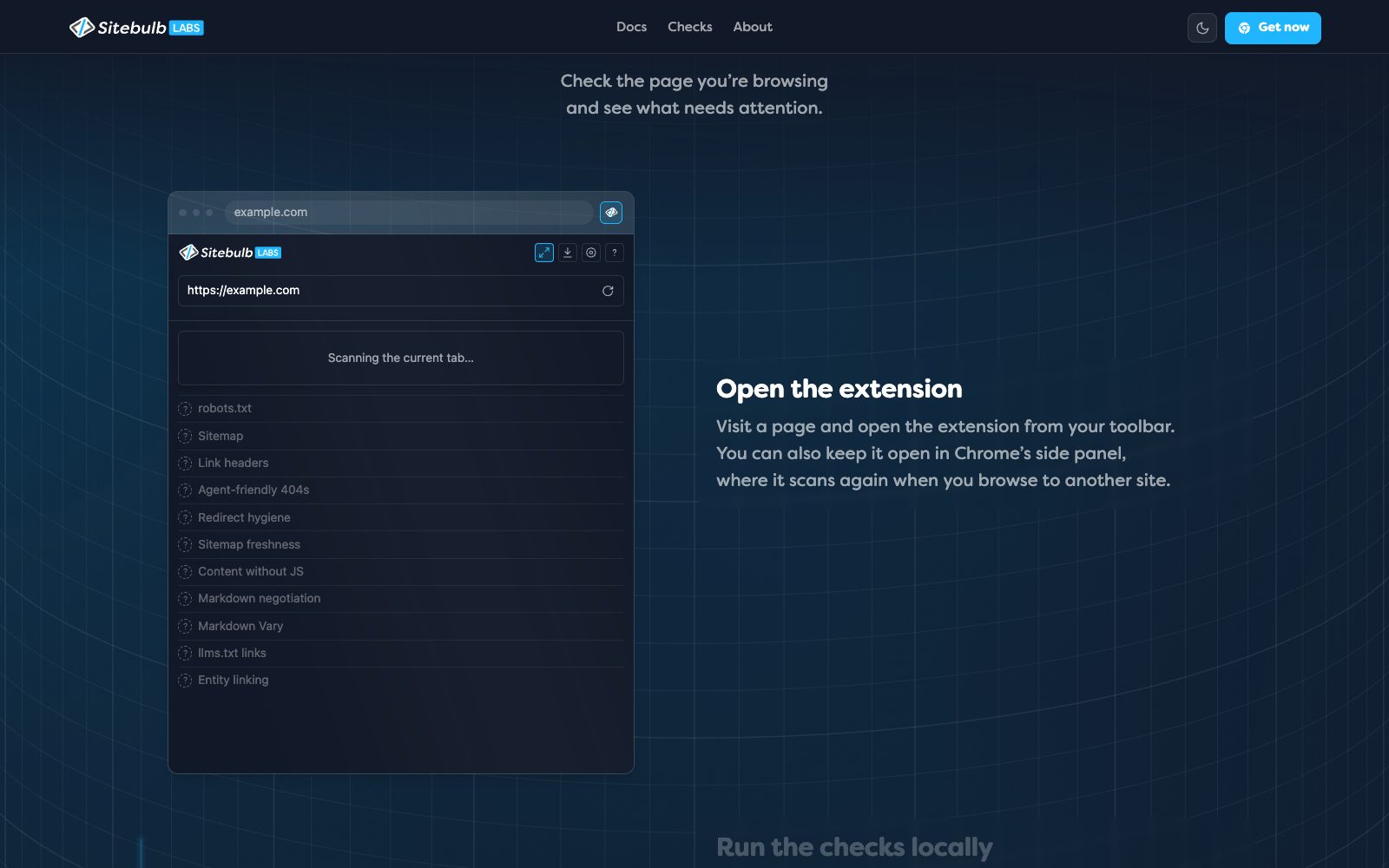
Open the extension on any page and it scores it as you browse.
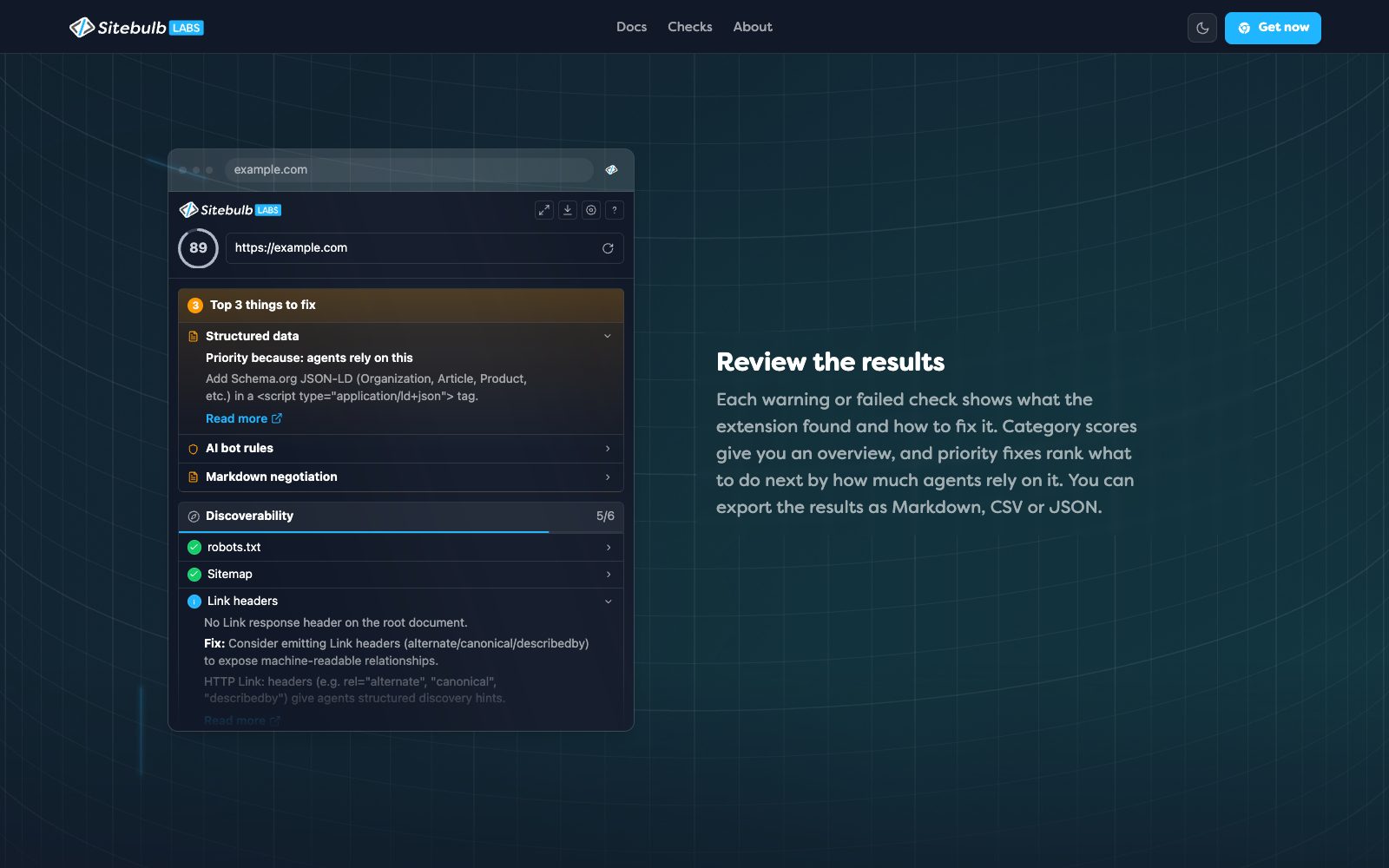
Each result explains what was found, how to fix it, and why it matters.
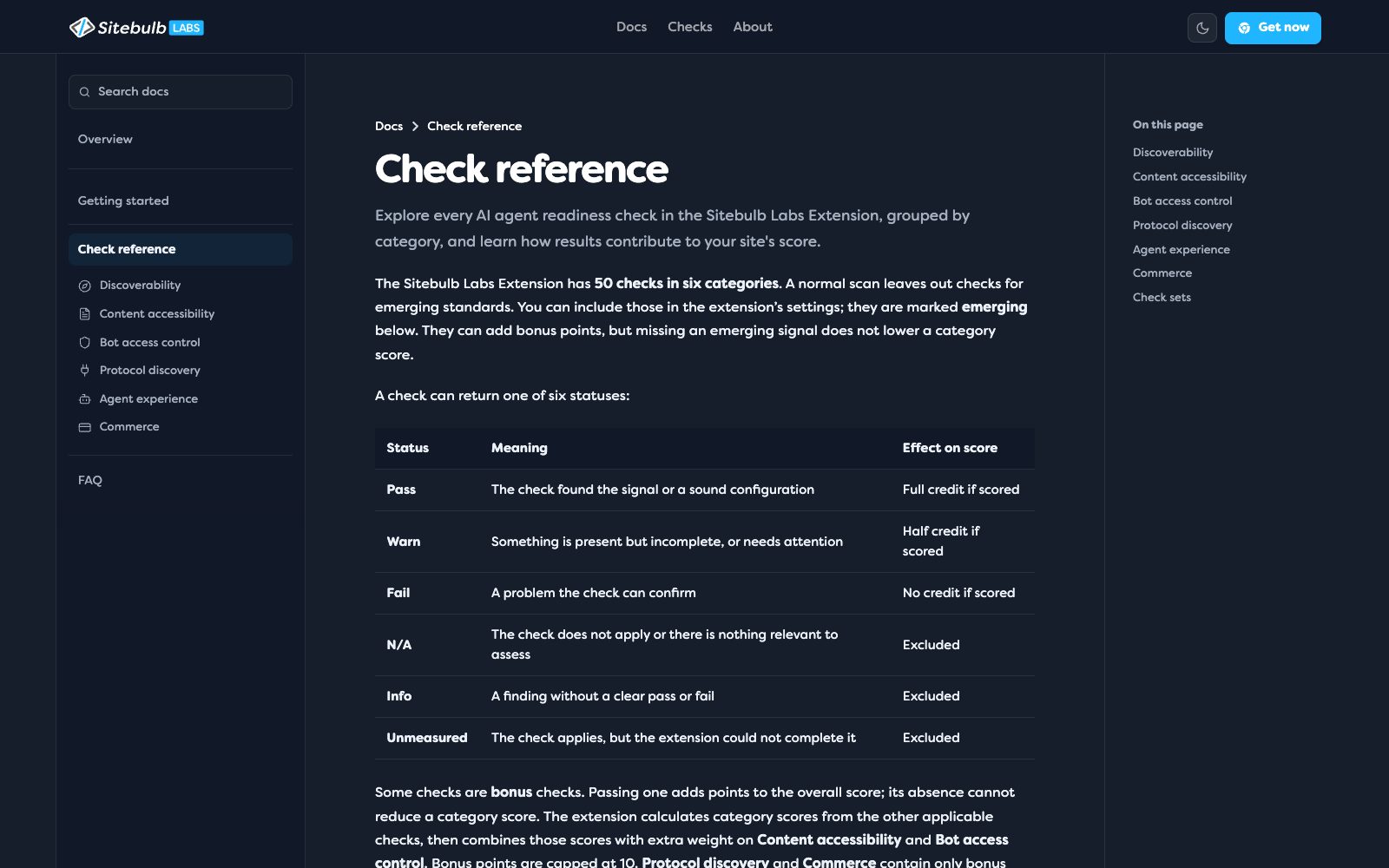
The check reference documents every check, grouped by category.
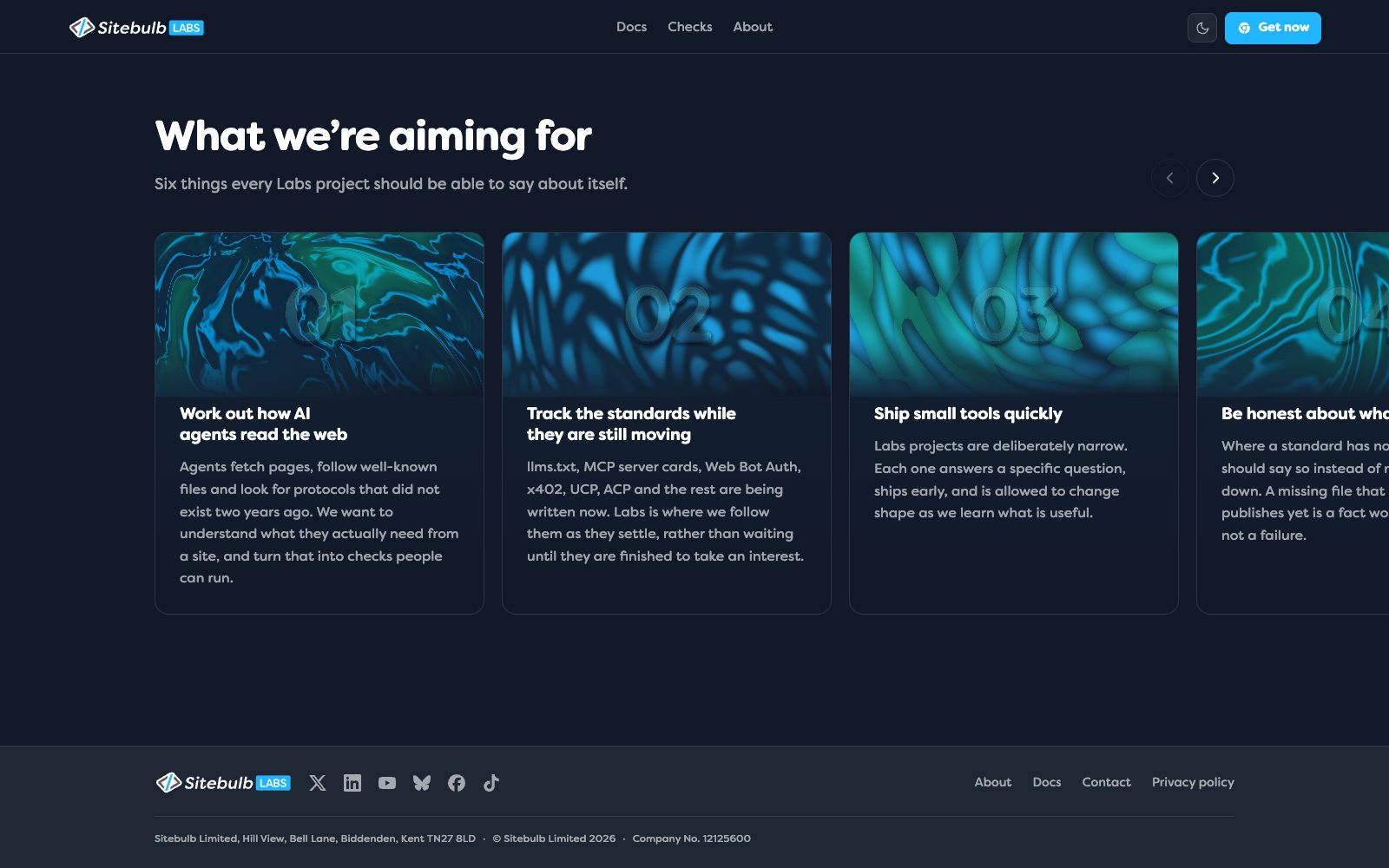
The about page sets out what every Labs project should be able to say about itself.
The Problem
People increasingly find things through ChatGPT, Claude, Perplexity and AI agents, not just a list of blue links. SEOs know how to audit a site for Google. Almost nobody could answer the newer question:can an AI agent actually find, read and use this site?
The signals that answer it are scattered across a fast-moving mix of conventions and draft specs: llms.txt, AI bot rules, structured data, Markdown versions of pages, and new agent protocols appearing almost monthly. The goal was to turn that noise into a tool an SEO could run on any page andact on in minutes.
The Research
Before designing anything, I mapped what agents rely on today and what is still speculative. That split became50 checks in six categories, each framed as a question an agent would ask:
- Discoverability: can an agent find the pages, files and services?
- Content accessibility: can it read and understand what it finds?
- Bot access control: what do the crawl rules say about AI bots?
- Agent experience: can it make sense of the page and use its controls?
- Protocol discovery: can it find an API, tool or service it can use?
- Commerce: can it transact with the site?
The checks run from proven signals like robots.txt and Organization schema to emerging ones like MCP Server Cards, WebMCP, A2A Agent Cards and x402 payments.
The Solution
A Chrome extension that checks the page you're on and answers three questions in order: where do I stand, what should I fix first, and how do I hand it off?
Key Features
Scores at a Glance
An overall score plus a score per category, so you can see in one look whether the problem is access, content or discovery.
Priority Fixes
Instead of a list of 50 results, a short panel of fixes ranked by how many points each one could add. The estimates come from the current scan, not a generic list of quick wins.
Toolbar and Side Panel
Run a quick check from the toolbar, or keep results open in the side panel while you browse a site page by page.
Exports
Results export as Markdown,CSV orJSON, ready for a ticket, a spreadsheet or another tool.
Docs Site
A reference for every check atlabs.sitebulb.com, explaining what each one looks for and why it matters.
Design Decisions
The hard part was making a score people would trust in a field where the standards are still being written.
- Never punish the frontier.Emerging protocols are bonus checks. They add up to 10 points when present, but missing them never lowers a score. Most are off by default.
- Be honest about uncertainty.Checks can return Pass, Warn, Fail, N/A, Info or Unmeasured. Anything that couldn't be checked is left out of the score, not marked as a fail.
- Weight what matters most.Content accessibility and bot access control count for more in the overall score. If an agent can't get in or can't read the page, nothing else matters.
- Private by default.Checks run locally in the browser and requests go straight to the site, so it works on staging sites behind a VPN.
Technologies Used
| Stack Area | Tools & Frameworks |
|---|---|
| Extension | Chrome extension, toolbar + side panel |
| Checks | 50 checks run locally; optional DNS lookup via Cloudflare |
| Exports | Markdown, CSV, JSON |
| Site | labs.sitebulb.com, with docs for every check |
Impact
Labs gave Sitebulb an early position in AI agent readiness, a space most SEO tools hadn't touched. I took it from an open question to a shipped product: researching the field, deciding what to measure and how to score it, then designing and building the extension and its site.